There's a scene playing out repeatedly at Rara Lake that perfectly captures both the promise and the problem of Nepal's most beautiful hidden gem.
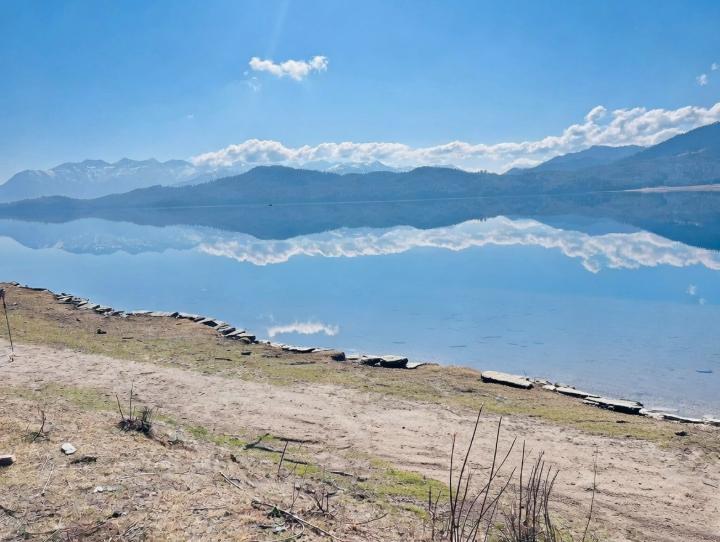
A family arrives after a grueling journey - first a flight to Talcha Airport carved into a hillside, then a two-hour trek through pine and rhododendron forests. They round the final bend, and there it is: Nepal's largest lake, 167 meters deep, stretching 5.1 kilometers beneath skies so blue they seem impossible. The wife reaches for her phone to capture the moment. No signal. The children ask where they'll sleep tonight. Every room at the two lakeside hotels is booked for weeks.
By nightfall, they're pitching tents, eating cold food, and wondering if the journey was worth it.
The Numbers Tell a Story of Missed Opportunity
In the fiscal year 2024-25, 16,589 visitors came to Rara. That's up from 10,550 the previous year, and 14,600 the year before that. Steady, organic growth - nearly 30% over two years - without any serious marketing, without infrastructure, without hotels.
And here's the kicker: only two hotels operate near the lake itself.
Source: The Rising Nepal 16/11/2024; The Rising Nepal 01/07/2025; The Kathmandu Post 03/08/2025; My Republica 01/04/2019; Nepalgram Adventures 03/07/2025
Two hotels. Nearly 20,000 annual visitors. Even assuming those hotels run at 100% capacity every single night of the season, they cannot possibly accommodate more than a fraction of these tourists. The rest? They're camping, cutting trips short, or sleeping hungry.
But ... the lack of proper accommodation and food options there, you don't feel like coming back.
Now, let's project the possible tourists in Rara National Park for 2026.
Month | % Tourists | Realistic | Optimistic | Cautious |
|---|---|---|---|---|
January | 1.31 | 321 | 345 | 299 |
February | 3.87 | 951 | 1,020 | 885 |
March | 6.60 | 1,613 | 1,736 | 1,505 |
April | 14.64 | 3,587 | 3,850 | 3,338 |
May | 15.49 | 3,795 | 4,074 | 3,532 |
June | 11.88 | 2,911 | 3,124 | 2,709 |
July | 0.86 | 211 | 226 | 196 |
August | 2.42 | 593 | 636 | 552 |
September | 5.18 | 1,269 | 1,362 | 1,181 |
October | 23.34 | 5,718 | 6,138 | 5,322 |
November | 11.57 | 2,835 | 3,043 | 2,638 |
December | 2.84 | 696 | 746 | 643 |
Total | 100 | 24,500 | 26,300 | 22,800 |
For more on these three scenarios, visit this link: Rara National Park
Business Insight: There are two hotels inside the park. They remain booked throughout the season.
Here is an interesting point. According to a report, the number of good hotels has also started to increase. Along the Jumla trekking route, there are tea shops and simple lodges.
However, residents say that tourists “do not go to dozens of hotels” because they prefer to stay near the lake.
Dozens. The capacity exists, but not where the tourists actually want to stay.
Hotel Capacity vs. Tourist Demand Around Rara Lake
Visitor numbers to Rara National Park are projected to continue growing in 2026, with an estimated 22,800 to 26,300 tourists annually, depending on the scenario. However, local insights reveal a critical structural issue: while several hotels and lodges exist in the wider area, tourists strongly prefer staying close to Rara Lake itself. Reports indicate that despite the presence of “dozens of hotels,” many are not fully utilized because they are located away from the lakeshore. This creates a spatial mismatch between tourism demand and accommodation supply.
If current policies restricting hotel development near the lake remain unchanged, accommodation pressure during peak months may increase. Conversely, if hotel restrictions around designated zones near the lake are eased with strong environmental safeguards, new hospitality investments could emerge to meet tourist preferences.
No. of Hotels Required As Per Projected Tourists in 2026
Calculation Method:
Average stay length: 2 nights per tourist; Average hotel occupancy target: 60% (to allow seasonal fluctuation)
Average hotel size: 20 rooms; Average guests per room: 2 persons
The effective capacity of one hotel:
20 rooms × 2 persons = 40 guests per night; Annual capacity = 40 × 365 = 14,600 guest-nights; At 60% occupancy = 8,760 guest-nights are usable per year
Example: Cautious Tourism Growth
-
Annual tourists: 22,800; Guest-nights: 22,800 × 2 = 45,600
Hotels required: 45,600 ÷ 8,760 ≈ 5–6 hotels
Business Decision:
If environmental zoning policies remain strict, think of eco-lodges, trekking lodges, and community homestays in surrounding villages.
If carefully regulated hotel restrictions around designated zones near Rara Lake are uplifted, there will be clear opportunities for eco-friendly boutique hotels, premium lodges, and lakeside hospitality ventures.
Beyond the Hotel Room: Three Products Your Rara Business Needs
Solving Rara's accommodation crunch is step one. Step two is creating an experience so unique that visitors become ambassadors. Whether you are building a new lodge or expanding an existing one, these three local products are not just add-ons—they are your competitive advantage.
Serve Chino: The Superfood That Sells Itself
You serve dal-bhat. Every lodge does. But what if your dal-bhat was different?
Replace the rice with Chino (finger millet). This grain from Mugu villages was once forgotten. Today, it is a blessing for diabetics and a superfood in high demand in Kathmandu.
For more: Chino Businesses in Nepal
Health-conscious travelers will pay a premium for a meal that manages blood sugar. One consumer told Onlinekhabar: "After my doctor advised me to eat Chino rice instead of regular rice, I have been eating it for the past two years... It has been helping keep my sugar level under control."
Farmers in Chhayanath Rara Municipality sell to local traders for NPR 60/kg. The same grain sells for NPR 350 in Kathmandu. You source cheaply. Guests perceive high value.
A local trader admits, "Production is limited; we haven't been able to meet the demand." Your lodge can provide the consistent market farmers need.
Advertise it like this: "Try our signature Karnali Superfood Thali - fresh Chino dal-bhat made from grain grown in Mugu villages. Good for your health. Good for our farmers."
Use Duna Tapari: The Eco-Plate Your Guests Will Remember
Now picture your guests eating from a beautiful duna tapari - a traditional leaf plate. No plastic. No Styrofoam. Just pure, biodegradable tradition.
For more: Duna Tapari in Nepal
-
A national park demands conservation. Plastic is a violation. Duna tapari is 100% compostable.
Nepal produces 60–80 million pieces annually, yet groups everywhere "cannot meet the demand."
The cost per plate is NPR 1–6. The branding value is immense.
Advertise it like this: "We serve every meal on authentic duna tapari - handcrafted by women entrepreneurs. Zero plastic. Zero guilt."
Offer Titepati Tel: The Remedy Your Tired Guests Crave
The trek to Rara is tough. Legs ache. Back pain. By evening, your guests are exhausted.
In the high hills, Titepati (wormwood) grows wild. Local healers have used it for generations. Its oil relieves pain, soothes muscles, and treats digestive issues, respiratory ailments, fever, and skin infections.
For more: Coming Soon
Guests arrive sore. A remedy waiting for them creates instant goodwill.
Titepati oil sells for Rs 8,000–10,000 per litre in the market. A small bottle costs little to produce but commands a premium as "natural Himalayan relief."
It is used as an anti-inflammatory, digestive aid, and nervine.