In the villages of Nepal, a common sight during the morning hours is someone cleaning a cowshed. But have you ever wondered how valuable the waste coming out of that one shed actually is?
An adult cow produces 29.5 kg of dung daily. A cow can excrete up to 15 times a day. In this way, one cow gives about 908 kg of dung in a year.
This means that an ordinary cow is like a small organic factory, producing more than 10 tons of raw organic material throughout the year.
Source: Ferguson Foundation
But unfortunately, in Nepal, this valuable resource is still seen as "waste," to be discarded by throwing it in the fields, burning it, or washing it away.
This blog outlines the current situation in Nepal, global market demand, and potential economic opportunities for organic fertilizer made from cow dung, supported by data, analysis, and examples.
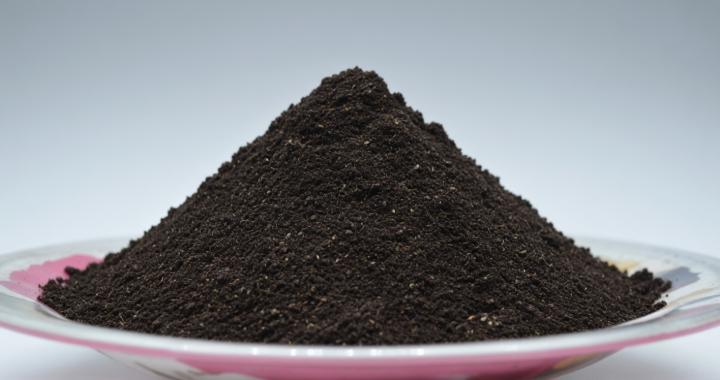
Global Trade Value: From Waste to International Commodity
The value of dung manure is no longer limited to the village cowshed. It is now a product in the international agricultural market, used as a high-quality organic fertilizer.
Globally, the demand for dung-based manure is increasing rapidly due to the expansion of organic farming and growing concerns about the environmental impact of chemical fertilizers. According to available market analysis, the market, which was approximately 12.02 billion US dollars in 2026, is projected to reach 18.65 billion US dollars by 2031. This represents a Compound Annual Growth Rate (CAGR) of nearly 9.2%.
This sends a clear signal: the international demand for dung manure is growing rapidly, and with the right policies and business initiatives, Nepal could also become a potential supplier in this market.
Description | Information |
|---|---|
Major export destinations | Maldives, Singapore, United Arab Emirates, Kuwait, Saudi Arabia, USA |
Use in Gulf countries | To retain soil moisture in desert areas and increase date palm production |
Price per kilogram (export) | Approximately NPR 48–80 per kg |
Source: Radiocity; LinkedIn; Indiannewslink; Yahoo Finance
Key Messages: The fact that India is currently exporting cow dung and dung-based products worth more than 400 crore rupees annually shows a great opportunity for Nepal. Nepal also has a large livestock resource. If:
Dung is collected systematically,
Compost or vermicomposting is produced using scientific methods,
Organic certification is obtained in accordance with international standards.
Then Nepal can also develop dung manure as an exportable organic product.
This could create a new green business for farmers, cooperatives, and small entrepreneurs in rural areas.
Cow Dung Manure as a Business: Individual Economic Potential
Cow dung manure production is an agricultural enterprise that can be started as an individual or small-scale business. Its biggest advantage is that the raw material (dung) is easily available in rural areas, and the initial investment is relatively low.
From a business perspective, processing dung into vermicomposting or compost manure significantly increases its value. For example, in Nepal, there are examples of some farmers who have succeeded in earning up to millions of rupees annually by purchasing dung and producing vermicompost.
An entrepreneur from Banke is a vivid example of this. He rented just 4 Kattha of land and is producing vermicompost on 60 beds. This journey, which started in 2014 AD by buying one kg of earthworms, has today reached an annual turnover of 20-25 lakh rupees.
This shows that with proper management and market access, dung manure can become an agricultural business that can be started with a small investment. The table below shows the production and income from one production cycle using approximately 18-20 trolleys of dung:
Description | Estimated Figure |
|---|---|
Cow dung used at a time | 18–20 trolleys |
Manure produced from one trolley | ~12 quintals |
Total production (20 trolleys) | ~240 quintals |
Market price | ~NPR 2,500 per quintal |
Total sales value | ~NPR 600,000 |
Production cycle | 3–4 months |
Source: The Rising Nepal 10/03/2026
Math of the Income: If three production cycles are run in a year:
Annual Potential Sales: Approximately NRS 18-20 Lakhs. This leads to a potential for a monthly income of NRS 40,000-50,000.
Business Insight: Why is this business attractive?
Low Raw Material Cost: Dung is easily available in rural areas, and in many cases, it can be found cheaply or even for free.
High Potential for Value Addition: The price of raw dung is very low, but after processing, the price of the resulting vermicompost can reach up to Rs 20–25 per kg.
Growing Market Demand: The demand for organic fertilizer is continuously increasing in organic farming, vegetable cultivation, fruit orchards, nurseries, and urban gardening.
Easy to Scale: You can start on a small scale and increase production capacity as the market grows.
Demand for Dung Manure in Nepal: A Case Study
While statistics on the demand for dung manure in Nepal are not readily available, comments on a Facebook post from a Nepali company selling 25 kg of dung manure for Rs. 500 clearly highlight the growing demand for dung manure in the Nepali market. An analysis of these comments reveals several important trends.
Note: Looking at this company's profile and its agriculture and industry-related posts, it can be inferred that it is in the business of producing manure from dung.
Comments | Percentage |
|---|---|
Demand (interested in ordering) | ~45% |
Asking about delivery/charges | ~15% |
Asking about the location/contact number | ~18% |
Asking about quality/purity | ~7% |
Source: Facebook - dated 15/3/2026
Analysis of the Comments: Certain Patterns Emerge
Most consumers have demanded 1-2 sacks (25-50 kg). Some have demanded up to 4-6 sacks (100-150 kg), and a few consumers have even demanded large quantities (20-70 sacks), indicating the presence of commercial users.
The demand is not limited to the Kathmandu Valley. Along with various locations within the valley, demand has come from outside the valley as well, including Banepa, Hetauda, Palpa, Pokhara, Bharatpur, Biratnagar, Bhairahawa, Malekhu, and Dharan.
The consumers demand the product range from household users needing it for home gardens, kitchen gardens, and pots, to commercial farmers engaged in apple and vegetable farming, livestock rearers comparing it with cow/buffalo dung, and even businesses requesting it for resale.
Key Business Lessons to Understand:
Demand Exceeds Supply: Many customers have complained about not receiving the product, even a long time after placing an order. This indicates that the supply system in the market might not have met the demand.
Price Sensitivity: Some customers have commented that the price is high. This shows the need for balance in pricing and understanding the customers' purchasing power.
Competitive Market: Some customers have informed that in places like Biratnagar, manure is available for Rs. 25 per sack. This shows that there is price competition in this business and that customers are price-conscious.
Cow Dung Manure Industry: Opportunities and Key Risks
Despite the great potential in the cow dung manure business, there are some risks that need to be identified in time and appropriate mitigation measures adopted. Even though the market demand is high, many entrepreneurs are suffering from problems such as raw material shortages, labor crises, competitive markets, customer trust issues, and policy instability. Identifying and managing these risks is the cornerstone of long-term success.
Raw Material Shortage: Despite a daily production capacity of 15,000 kg at an entrepreneur's industry in Morang, only 2,000 kg is being produced due to a shortage of raw material (dung). Therefore, it would be appropriate to explore the option of making long-term purchase agreements (MOUs) with local livestock farmers. Establishing dung collection centers through a cooperative model could be effective. This problem can be reduced by running a livestock business alongside the manure business.
Labor Shortage: According to a study conducted in Surkhet, as the rural population decreases, it is becoming difficult to find laborers for collecting dung and making manure. Therefore, mechanization (use of machinery) is necessary.
Market for Fake/Adulterated Manure: In border areas, fake manure coming from India is being packaged and sold under Nepali brands. Some brands are being sold without quality testing. Therefore, it is essential to make laboratory testing and certification mandatory. Branding and packaging can be made attractive and secure. Customers trust products that carry a certificate with a "Nepali Organic" seal.
Lack of Technical Knowledge: A farmer in Kapilvastu was only able to successfully produce vermicompost after UMN's project provided him with earthworms and training. Therefore, regular training programs must be conducted. Collaboration with the Agriculture Knowledge Center and technicians can be pursued. Exposure visits to successful farmers should be organized.
Policy Instability and Lack of Subsidies: Even 7 years after declaring Karnali Province an organic province, the expected results have not been achieved. Laboratories built with crores of rupees remain unused. Market assurance can be achieved through partnerships at the local level. Entrepreneurs should get affiliated with industry organizations and associations to raise collective voices.
Gap Between Production and Demand: Although an entrepreneur in Banke stated that manure could be produced up to 4 times from dung purchased once, a systematic plan is needed for this. Therefore, a production cycle plan is necessary. Production schedules can be adjusted according to market demand. Diversification is key: vermicompost, compost, liquid manure.
Storage and Transportation Challenges: Although 71% of households have agricultural land, only 12% use organic manure. Storage and transportation challenges are the main reasons for this. Therefore, storage centers should be established at the local level. Collective transportation can be done through cooperatives. Small packaging (5-10 kg) is suitable for household users.
Source: The Rising Nepal 21/11/2024; The Rising Nepal 10/03/2026; Ratopati 26/04/2018; UMN
Final Conclusion: Is There a Future in this Business?
At the beginning of this blog, we learned that a single cow produces 29.5 kg of dung daily and 908 kg annually. Nepal has approximately 7.5 million cattle. If only 10% of the dung from these cows could be systematically collected and turned into manure, it could create an economy worth billions of rupees annually.
This is not just a business; it is also a campaign to save the soil. This business has a huge role to play in improving the health of Nepal's deteriorating soil caused by chemical fertilizers, providing farmers with cheap and accessible organic manure, creating employment for the youth within the country, and protecting the environment.
Therefore, let's not think of dung as waste. It is a valuable resource. If utilized properly, it can revolutionize Nepal's agricultural economy.
The size of the work doesn't matter; the commitment shown in it determines the result. - Bir Bahadur Hamal, Banke, cited in Ratopati 14/02/2026
With this commitment and the right strategy moving forward, Nepal's future in the cow dung manure business is bright.