In recent years, an interesting change has been observed in Nepal's agricultural sector: the commercial expansion of crops like beetroot (chukandar), which were traditionally used only on a limited scale. Beetroot, which was previously not widely known or had low demand in local markets, is now emerging as a high-value cash crop due to organic production, growing health awareness, and connections with international markets.
In areas like Chitwan, farmers have commercialized beetroot cultivation alongside carrots, even reaching export levels, creating new possibilities for rural income, employment, and agricultural diversification. The global trend of recognizing beetroot as a nutritious 'superfood,' combined with trust in organic production and local agricultural innovation efforts, has turned this crop not just into a vegetable but into an important subject from both economic and health perspectives.
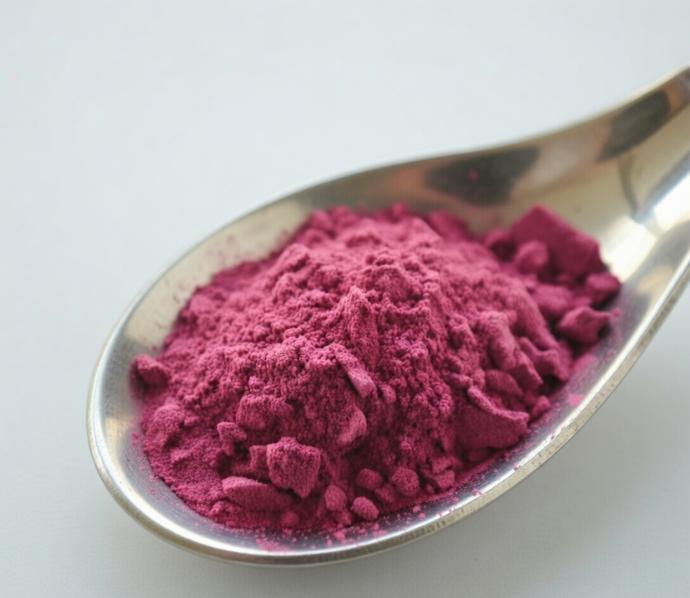
Turn beetroot into powder
Think about converting beetroot into powder. It has more value.
Potential of Beetroot Cultivation in Nepal
Nepal's geography and climate are considered suitable for beetroot cultivation. According to a study conducted in the inner Terai region of Sindhuli, among nine different varieties of beetroot, the 'Action' variety yields the highest economic return - 36.76 tons per hectare (Dhital et al., 2025).
Similarly, another study conducted in the hilly region of Khotang showed that using organic manure (compost) can produce up to 13.95 tons per hectare, which is more than double the yield without using organic manure (Majhi et al., 2024).
A study conducted in Rampur, Chitwan, concluded that the highest yield (49.78 tons per hectare) can be achieved by combining poultry manure and urea (Sapkota et al., 2021).
These findings demonstrate that the productivity of beetroot can be
significantly increased in Nepal's Terai, inner Terai, and hilly regions by
using improved varieties and proper manure management.
Research Site | Best Variety / Manure Management | Obtained Yield (per hectare) | Main Conclusion |
|---|---|---|---|
Sindhuli | 'Action' variety | 36.76 tons | 'Action' variety is best for yield; Ruby Queen and Ruby Red are best for quality |
Khotang | 100% compost manure | 13.95 tons | Use of organic manure significantly increases yield (double compared to control) |
Chitwan | 50% poultry manure + 50% urea (Madhur variety) | 49.78 tons | Mixed manure application and Madhur variety is an excellent combination |
Source: Dhital et al., 2025; Majhi et al., 2024; Sapkota et al., 2021
With appropriate variety selection and manure management, beetroot productivity in Nepal's geographical regions can reach up to 50 tons per hectare. However, when scaling this yield to commercial farms (for example, 1 bigha or 5 bigha), factors such as soil diversity, access to irrigation, and management efficiency may lead to variation.
Nevertheless, these findings provide Nepali farmers with a strong scientific foundation for self-reliant and export-oriented beetroot production.
Let's keep in mind: The commercial potential of beetroot is not limited to the sale of fresh vegetables. Rather, there is a great opportunity to process it into various high-value products. Consider these possibilities:
Beetroot powder: Long-lasting, easy to transport, and suitable for export. It can be used in smoothies, bakery products, and as a natural food color.
Beetroot juice: Targeting health-conscious consumers in urban areas. Can be supplied fresh or packaged to supermarkets, juice shops, and hotels.
Beetroot paste/pickle: Long shelf life, easy to use, and suitable for household markets. Growing demand from restaurants and retailers.
Natural color (betalain): As an alternative to artificial colors, there is a growing demand in the food industry, cosmetics, and beverage companies. This also holds potential for high-value export.
Market Landscape of Beetroot: Potential Revealed by Import-Export Statistics
Although the beetroot market in Nepal is currently import-oriented, the remarkable growth in exports has revealed the sector's great potential. In fiscal year 2080/81 (2023/24 AD), Nepal imported 296.85 tons of beetroot (and vegetables of the same group). During the same period, Nepal exported 156.65 tons.
Compared to the previous fiscal year 2079/80 (2022/23 AD), when only 2.04 tons were exported, the export of 156.65 tons in 2080/81 shows an extraordinary increase of 77 times. The average price of exported beetroot is Rs. 43.1 per kilogram, while the average price of imported beetroot is Rs. 35.2 per kilogram. The fact that the export price is higher than the import price indicates that the quality (organic) of beetroot exported from Nepal is higher.
These statistics clearly demonstrate the vast potential for beetroot production and export in Nepal.
Fiscal Year | Description | Quantity (tons) | Average Price per kg (Rs.) |
|---|---|---|---|
2079/80 | Import | 250.60 | 26.3 |
2079/80 | Export | 2.04 | 46.1 |
2080/81 | Import | 296.85 | 35.2 |
2080/81 | Export | 156.65 | 43.1 |
Source: Ministry of Agriculture and Livestock Development (2025, 2024)
Note: Since beetroot, carrots, radishes, and other vegetables are imported/exported under the same code (HS 07069000), the actual price of beetroot may be higher than that of radish or carrot.
Keep in Mind: These statistics clearly show that for those wishing to start a beetroot business in Nepal, two major markets are available.
A strong domestic market, indicated by annual imports of about 300 tons
An expanding international market is demonstrated by a 77-fold increase in exports.
Organic beetroot has more export value
Eggshells are often thrown in trash, which you can use to create manure.

Shripur Village, Chitwan: A Farmer's Life Transformed by Beetroot Cultivation
To understand the potential of beetroot cultivation in Nepal, a real-life story from Shripur village in Chitwan serves as a key example. A farmer there started commercial beetroot cultivation only three years ago. Today, he and his group are exporting beetroot to Germany. He has been cultivating beetroot on 2.5 bighas of land. His annual production is 30 tons. The estimated production per bigha is about 120 quintals.
Details | Amount (Rs.) |
|---|---|
Total Annual Income | 2,000,000 (Twenty lakh) |
Net Annual Profit | 500,000 – 700,000 (Five to seven lakh) |
Source: Setopati 30/3/2025
From beetroot, I earn around NPR 2 million in revenue, with a profit of about NPR 500,000 to 700,000. It may not seem like a huge return relative to the investment, but for me, this level of profit is quite significant.
Based on the news, this farmer group is selling beetroot at NRS 50 per kg. Interesting, this price is also the same in the local market.
Market | Price (per kg) | Annual Export Quantity |
|---|---|---|
Germany | Rs. 50 | 600 quintals (60 tons) ready |
Within Nepal | Rs. 50 (stable) | - |
Note: The price of beetroot has remained stable at Rs. 50 per kg both last year and this year. In contrast, the price of carrots has dropped from Rs. 20 to Rs. 15.
Based on the news, below given is the cost and other activities required for beetroot farming in Nepal.
Cost Component | Details |
|---|---|
Seed Cost | NPR 2,200 per kg (imported from India) |
Labor Cost (weeding only) | 1,100 laborers (for a single round) |
Organic Fertilizer | Farmyard manure, vermicompost, organic inputs |
Cropping Cycle | Paddy (monsoon) → Beetroot (winter) → Sesame (spring) |
Beetroot needs to be weeded three times. This year, I hired 1,100 laborers just for the wedding.
Key Notes:
Adopt organic farming: Good yields can be achieved even without chemical fertilizers and pesticides. Organic farming also makes it easier to access international markets.
Collective farming is essential: Working as part of a group, such as a cooperative or farmers’ association, makes it easier to obtain organic certification and secure export agreements.
Follow crop rotation: A cropping cycle of paddy (monsoon) → beetroot (winter) → sesame (spring) helps maintain soil fertility and ensures year-round income.
Market assurance is key: Large-scale investments, such as hiring 1,100 laborers at once, are only feasible when there is a guaranteed market. Pre-agreed pricing helps secure farmers against market risks.
Government support is available: The government has established standards for organic certification and is running organic mission programs, which make the certification process more accessible for farmers.
Beetroot Business: Key Risks and Mitigation Measures
Beetroot farming, like other agricultural enterprises, involves several risks. However, with proper planning and management, these risks can be effectively minimized. The key risks and their mitigation measures are outlined below:
Climate and Irrigation Risk: Lack of winter rainfall can significantly affect beetroot production.
- Develop water sources such as wells, tube wells, or ponds to secure a reliable water supply.
- Begin planting immediately after the paddy harvest and ensure timely irrigation during the early growth stages.
- Cover the soil with straw or plastic mulch to retain moisture and reduce water loss.
Labor Shortage Risk: Beetroot farming requires a high level of labor input. With the increasing outmigration of youth abroad, finding workers for farm activities could be challenging.
- Use small-scale machinery for weeding, harvesting, and processing (e.g., power tillers, handheld weeding tools).
- Establish local labor banks or cooperatives to mobilize workers as needed.
- Work collectively rather than individually to reduce labor requirements and improve overall efficiency.
Market and Price Volatility Risk: The example of carrots shows how sudden price drops can severely impact farmers. When the price fell from NPR 20 to NPR 15 per kg, farmers incurred losses. Although beetroot prices have remained relatively stable at around NPR 50 per kg, there is still a risk of fluctuations in international markets in the future.
- Establish purchase agreements with exporters at pre-determined prices.
- Avoid relying on a single market. Supply to local markets, hotels, restaurants, and processing industries as well.
- Instead of selling fresh produce, convert beetroot into products such as powder, puree, or pickles. This reduces price volatility risk and increases shelf life.
Organic Certification and Quality Risk: Organic certification is mandatory for exporting to international markets. However, the certification process is often lengthy, costly, and complex.
- Obtaining certification as a group reduces costs and simplifies the process compared to individual certification.
- The government has recently established standards for organic certification. Farmers can take advantage of these provisions to obtain formal certification.
- Maintain records throughout the production cycle, including seeds, fertilizers, water use, and harvest details. This helps build trust with exporters and ensures compliance with standards.
Seed Quality and Availability Risk: Limited access to high-quality seeds can negatively affect both yield and product quality.
- Studies from Sindhuli suggest that the ‘Action’ variety performs best in terms of yield, while ‘Ruby Queen’ is superior in quality. Farmers should use only certified seeds of such recommended varieties.
- Farmer groups can collectively set up seed storage centers (seed banks) to ensure timely availability.
- Invest in developing domestic seed production systems as a long-term solution.
Transportation and Infrastructure Risk:
Fresh beetroot is
perishable, and transporting it over long distances can lead to spoilage,
bruising, or loss of quality. The lack of cold storage facilities is a major
challenge in Nepal.
- Farmer groups or cooperatives can invest collectively in small-scale cold storage centers.
- Instead of shipping fresh beetroot, converting it into powder or puree makes transportation easier and extends shelf life.
- In the initial phase, focus on supplying closer cities (e.g., Kathmandu, Pokhara) rather than long-distance exports.
Final Conclusion: Is There a Future in the Beetroot Business?
Beetroot farming in Nepal has extremely high potential as a commercial venture.
- For Farmers: Start with experimental cultivation on 1–2 ropani of land. Join a local organic association for organic certification. Obtain certified seeds of the Action or Madhur variety from a nearby Agriculture Knowledge Center.
- For Entrepreneurs: Explore the potential for small-scale processing units for beetroot powder, juice, or natural color. Adopt a long-term purchase agreement model with farmer groups.
- For Investors: Consider investment
opportunities in cold storage facilities, processing equipment, or export
infrastructure.
To make this business successful, certain conditions must be met: adopting organic farming, forming group-based institutional structures (cooperatives/farmer groups), obtaining international-level organic certification, and ensuring market access. When all these conditions are in place, beetroot farming can become a highly profitable venture for Nepali farmers.
Want to try something different?
Turn bananas into powder. It has more value than the banana itself.