It is not just in Tikapur in the far west, but in various parts of the country, efforts to connect banana waste with income generation and sustainable production are intensifying. Farmers in Kailali, who in the past found it difficult to manage banana pseudo-stems and peels, are now transforming them into cloth, caps, and handicrafts through fiber production.
Similar practices are expanding in Terai districts like Jhapa, Chitwan, and Nawalparasi, where local employment is being generated through women's groups and cooperatives. This initiative has also begun to find an international market, as entrepreneurs in the capital, Kathmandu, and businesspeople affiliated with the Nepal Handicraft Federation have started exporting items made from natural fibers abroad.
With the demand for natural fiber increasing in countries like Germany, the United States, and Australia, banana waste management is now being established not just as an environmental solution, but also as a possibility to strengthen the rural economy.
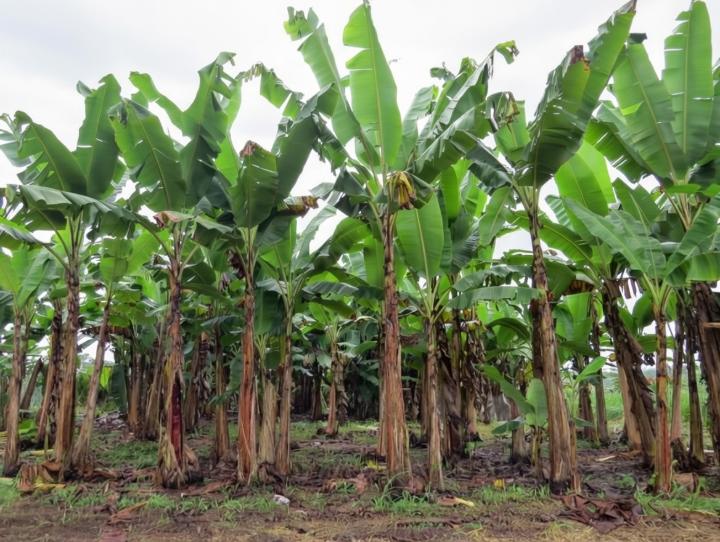
Increased Demand Due to Health and Environmental Awareness
Banana pseudo-stems, which were once discarded, are now becoming a part of a sustainable economy. Consumers seeking alternatives to synthetic fibers are increasingly drawn to natural and biodegradable materials. Clothes and handicraft items made from banana fiber are being seen as skin-friendly and environmentally friendly options due to their natural properties.
According to the producing groups, demand is exceeding supply. In some places, raw fabric produced is being sold in the Kathmandu market for NRS 300 per meter. However, there is potential to expand production if more modern machinery and skills become available.
The rates below are estimated market prices based on information received from various entrepreneurs and cooperatives:
Product | Price Rate |
|---|---|
Banana Fiber (Raw) | NRS 150 per Kg |
Banana Fabric | NRS 300–350 per meter |
Handicraft Items | NRS 50–1000 per item |
Source: The Annapurna Express 22/09/2025; The Rising Nepal 21/09/2025; The Rising Nepal 16/07/2024; The Rising Nepal 21/01/2025; Artha Nepal 06/02/2025
Some entrepreneurs, using fiber extraction machines, are producing up to 20 kg of fiber daily and selling it for NRS 150 per kg. Similarly, there are instances where about 25 sheets of paper are produced from half a kg of fiber. This shows that multi-dimensional products such as fabric, paper, and handicrafts can be made from a single raw material.
Key Messages:
Income from Waste: Pseudo-stems that were previously thrown away are now becoming an additional source of income for farmers. In some places, farmers are now providing agricultural residues that had to be discarded to entrepreneurs.
-
Growing Market Demand: The demand for natural fiber products is increasing not only within the country but also abroad. The export potential indicates this sector is becoming more commercialized.
-
Sustainable and Environmentally Friendly Alternative: Banana fiber is seen as an alternative to plastic and synthetic fibers because it is natural and biodegradable. This contributes to agricultural waste management and environmental protection.
Banana Waste Production Analysis – District Case Studies
Recently, alongside growing awareness of sustainability, natural products, and environmentally friendly goods, the demand for products made from banana fiber has increased significantly in both domestic and international markets. Banana pseudo-stems, once discarded as waste, have now become a valuable raw material for fabric, handicrafts, and paper. Products made from banana fiber are in demand in the urban boutique market and are also being exported to countries like Germany, the USA, and Australia.
Producing one kilogram of banana fiber requires approximately 10 banana pseudo-stems (Tikapur model). In many districts, the raw material is available for free or costs a maximum of NRS 40.
In Morang, the operating cost for a daily production of 20 kg is NRS 2,000. Accordingly, the production cost reaches about NRS 100 per kg, and by selling it at NRS 150 per kg, a profit of NRS 50 per kg can be earned.
In the Nepali market, raw banana fiber sells for NRS 150 per kg. However, value-added products like fabric and handicrafts are much more profitable. Fabric made from banana fiber sells for NRS 300–350 per meter, while handicraft items like caps and bags sell for NRS 50–1,000. The price for branded and exported products can be even higher.
Location | Raw Materials Required (Per Kg) | Raw Material Cost (NRS) | Production Cost (NRS per Kg) | Selling Price (Per Kg or Meter) | Net Profit (Per Kg or Unit) |
|---|---|---|---|---|---|
Morang | 20 Kg/day Production | Free – 40 | 100 | 150 | 50 |
Tikapur | 10 Pseudo-stems | Free | ~200–250 | 300–350 / meter | 100–150 / meter |
Makwanpur | 1 plant = 0.5 kg fiber | Not specified | Initial 800,000 | First month sales Rs. 50,000 | Medium-term returns |
Source: The Annapurna Express 22/09/2025; The Rising Nepal 21/09/2025; The Rising Nepal 16/07/2024; The Rising Nepal 21/01/2025; Artha Nepal 06/02/2025
In Morang and Tikapur, there is potential to earn higher profits by focusing on branding, mechanization, and product diversification (fabric, handicrafts, paper).
In Makwanpur, by producing paper from banana fiber and focusing on the local market and institutional purchases, medium-term profits can be achieved.
The quantity and cost of raw materials, as well as timely processing (within 72 hours), play a decisive role in production planning and pricing. Delayed processing degrades the quality of the fiber.
Significant Export Potential: Fiber from Tikapur is being exported to Germany, the USA, and Australia, which shows that the demand for Nepali banana fiber is high.
Potentiality of Banana Fiber in Jhapa, Morang, and Sunsari
The three districts of Jhapa, Morang, and Sunsari are the major hubs for banana production in East Nepal. These three districts alone produce 21,653 metric tons of banana fruit annually, from which approximately 86,612 metric tons of organic waste (pseudo-stems, leaves, and peels) are generated. This waste is not just a management challenge but also holds the potential for raw fiber production worth over NPR 1.84 billion.
Source: Ministry of Agriculture and Livestock Development (2025); ICAR (2022)
For Jhapa: You produce 10,650 metric tons of bananas annually. It means you have a vast reservoir of raw material. You are close to the Indian border. The Siliguri and Kolkata markets are near you. At a rate of NPR 50 per kg, you can earn an annual profit of up to NPR 2.56 crore.
You have the most raw material -- think big, invest big.
For Morang: Although you produce lower than Jhapa, you have the strongest infrastructure. Biratnagar Airport, the Koshi Highway, and the industrial corridor are in your area. You have the infrastructure — transform your production into a brand.
Instead of selling raw fiber, make cloth, caps, and bags from it. The model from your own district (20 kg/day, NPR 50 profit/kg) has already shown that this is possible.
For Sunsari: You are in a strategic location. Itahari is the main commercial hub of Eastern Nepal. There is a huge flow of consumers, tourists, and travelers heading to the hill districts here. Focus on handicraft production. Caps, bags, purses, and household items — all of these can be easily sold in the Itahari market.
You are at the heart of the market — create a strategy to deliver your products to the consumers.
The potential for banana fiber is not limited to these three districts. This strategy can be applied to any district in Nepal where bananas are cultivated. Whether it is banana farms in Kailali (Tikapur) in the Far-West, hillside gardens in Syangja, or large plantations in Chitwan and Nawalparasi—every banana-producing area has the same raw material available: banana pseudo stem.
Core Insight:
Waste is everywhere: Every banana farm produces pseudo stems, which are currently underutilized.
Technology is accessible: Machinery required to extract fiber is gradually becoming available throughout the country.
Market is growing: The demand for natural and eco-friendly banana fiber is increasing at both national and international levels.
Banana Fiber Industry: Opportunities and Key Risks
Although the banana fiber industry in Nepal is emerging as a green and value-added business, its long-term success depends on several key risks. Overall, raw material supply and market stability are its fundamental areas of sensitivity.
Raw Material Supply Risk: Since banana farming is seasonal and weather-dependent, the consistent availability of pseudo-stems cannot be guaranteed. Disease, natural disasters, or a reduction in farming areas could disrupt the production chain.
Market and Price Risk: The price of raw fiber may fluctuate over time. If supply increases, the market could become saturated, and increased competition from alternative natural fibers could put pressure on demand.
Technical and Quality Risk: Low machine efficiency, inconsistent fiber quality, or failure to adopt standards could lead to product rejection. If quality consistency is not maintained, there is a risk of losing the long-term market.
Financial and Cash Flow Risk: Initial investment can be high, and unstable cash flow could put pressure on operations. If reliance on debt is high, changes in interest rates could impact profits.
Operational and Management Risk: Weak supply chain management can make it difficult to connect production with the market. A lack of coordination in group or cooperative models could reduce efficiency.
Final Conclusion: Is There a Future in the Banana Fiber Business?
The future of the banana fiber industry in Nepal is bright, sustainable, and multi-dimensional. It is emerging not only as a means of managing agricultural waste but also as an important driver of the rural economy, women’s empowerment, and export promotion. Therefore, the market for banana fiber products is expected to expand even further in the future, beyond its current scope.
We are unable to meet the demand of even a single company.
We have not been able to supply fiber according to market demand.
The banana fiber industry offers a three-dimensional solution for Nepal:
Economic dimension: Increases farmers’ income, creates local employment, and generates foreign currency.
Social dimension: Empowers women, promotes rural entrepreneurship, and helps reduce migration abroad.
Environmental dimension: Manages agricultural waste, provides an alternative to chemical fertilizers (machine residue can be used as compost), and substitutes plastic and synthetic products.
The banana fiber industry in Nepal is still in its infancy. Yet, the path shown by women’s cooperatives in Tikapur, entrepreneurs in Morang, innovators in Makwanpur, and exporters in Kathmandu — this is the way forward for the industry’s future.