In a country like Nepal, with its diverse geography and climate, agricultural enterprises have been unlocking new possibilities. During the challenging time of the COVID-19 pandemic, many farmers began to think beyond traditional methods—and in this context, apple berry (jujube / Indian Jujube) cultivation has presented an attractive opportunity.
This fruit, which grows easily, provides long-term income with low investment, and has a growing demand in local and urban markets, has become a profitable option for agricultural entrepreneurs. With proper management and timely harvesting practices, it not only offers farmers a regular annual income but also provides an opportunity to expand their business.
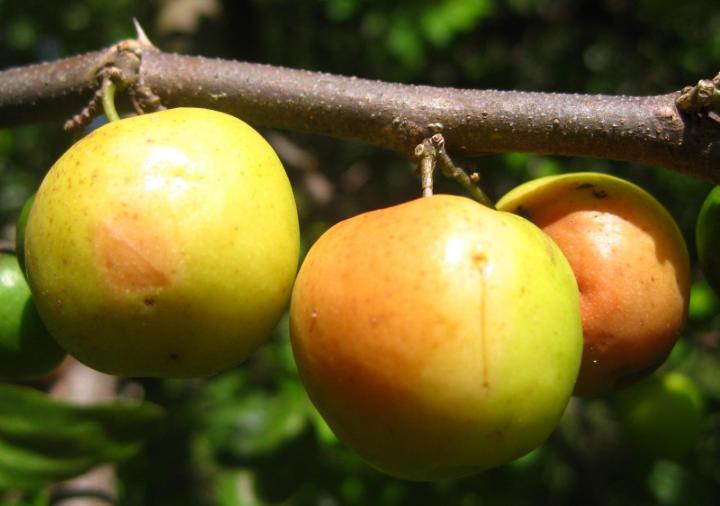
Market Price and Consumer Interest in Jujube (Apple Ber)
Jujube, known in Nepali as Apple Ber / Indian Jujube (Ziziphus mauritiana), is now becoming recognized as an agricultural business opportunity that offers economic prospects beyond traditional seasonal fruits. Its sweet taste, crispy texture, and long shelf life have increased its popularity among urban and suburban consumers. The growing demand from health-conscious consumers and interest in fruit-based products are increasing its demand not only in the domestic market but also in neighboring countries.
In markets such as Kathmandu, Bharatpur, and Butwal, the price of jujube reaches between 80 and 150 rupees per kilogram, which varies according to the variety, ripeness, and packaging. Branded and packaged jujubes are increasingly available in supermarkets, fruit shops, and online platforms, and direct farm-to-market sales are also on the rise.
Note: Market prices may vary by season, region, and variety. The information presented here has been compiled from various sources and can be used to guide potential entrepreneurs. When making personal investment decisions, it is necessary to consider local conditions and conduct market research.
Market / City | Price Range (NPR/kg) | Commercial Remarks |
|---|---|---|
Kathmandu | 100 – 150 | High-quality variety (Bharat Sundari) sold in supermarkets |
Bharatpur | 80 – 120 | Sold in local markets and directly from farms |
Butwal | 90 – 130 | Increasing demand for packaged products |
Vitamin C per 100 grams | 200–800 mg | Natural Vitamin C source (health benefits) |
International Trade (2025) | India → Nepal export records | Indicates strong demand in the Nepali market |
Source: The Kathmandu Post 6/4/2025; Croplibrary 7/8/2025; Tridge
Key Messages:
Health and Nutrition: Jujube is rich in Vitamin C, antioxidants, and minerals, making it increasingly popular among health-conscious consumers.
-
Direct Sales and Export Opportunities: Farmers can sell directly to urban markets, reducing reliance on middlemen. With rising demand from neighboring countries, there are also growing export opportunities.
-
Long-Term Profitability: With proper management, jujube trees begin bearing fruit within 3–4 years and can provide consistent annual income for decades, making them a strategic option for small and medium-scale farmers.
Economic Analysis of Jujube Cultivation – Based on 1 Ropani Land
Jujube is a long-term fruit crop and is a suitable option even for farmers with small landholdings. With proper management on just 1 ropani of land, attractive profits can be earned from the fourth year onward. There is a strong possibility of recovering the initial investment by the fifth year.
The first year requires an estimated investment of NPR 8,700, while the second year requires a maintenance cost of NPR 4,700. In both these years, there will be no production and no income. From the third year onwards, this investment will turn into income (but still no profit).
If the selling price of Jujube is fixed at NPR 100 per Kg, the estimated profits are:
Year | Production (kg) | Estimated Income | Net Profit (NPR) |
|---|---|---|---|
1 | 0 | 0 | -8,700 |
2 | 0 | 0 | -4,700 |
3 | 35 | 3,500 | -1,200 |
4 | 350 | 35,000 | 30,300 |
5 | 490 | 49,000 | 44,300 |
6 | 595 | 59,500 | 54,800 |
7 | 630 | 63,000 | 58,300 |
8–15 | 700 | 70,000 | 65,300 (per year) |
Source: Croplibrary 7/8/2025
Calculation Transparency
Based on this table, the total income stands at ≈ NPR 770,000 in 15 years. The cost stands at ≈ NPR 74,000, which gives a total net profit of ≈ NPR 696,000 within 15 years.
Return on Investment (ROI %) =
696,000/74,000 * 100%
≈ 940%
It means for every NPR 1 you invest in jujube farming, you get about NPR 9.40 back as profit over 15 years.
Business Insight:
Low Investment, High Return model for small farmers
Investment can be recovered within 4–5 years
-
After 8 years, potential for stable annual net profit of NPR 60,000–65,000
If the market price reaches NPR 120/kg, profit could increase by an additional 20–25%
Jujube Farming and Market Opportunities
Jujube (Apple Ber) farming is rapidly expanding in Nepal. In recent years, growing local demand has enabled farmers to gain direct access to urban markets and small-scale export opportunities. Data shows that Nepal has been both importing and exporting under HS code 8109090, which covers fruit and juice products. Although this code may include other juices or fruit products besides jujube, it helps to understand the size of the fruit-based market and price trends.
Local examples confirm the market potential. A farmer in Chitwan started jujube farming during the COVID-19 pandemic, and today his fruits are sold directly in Kathmandu and Butwal. With the help of 10–12 workers, he supplies about 20 quintals of jujube daily from two bighas of land.
Year | Status | Quantity (Kg) | Value (NPR) | Price per Kg (NPR) |
|---|---|---|---|---|
2079/80 | Export | 2,000 | 30,000 | 15.00 |
2079/80 | Import | 4,009,269 | 231,938,000 | 57.85 |
2080/81 | Export | 2,654 | 127,000 | 47.85 |
2080/81 | Import | 2,916,286 | 244,716,000 | 83.91 |
Source: Ministry of Agriculture and Livestock Development 2024 & 2025; Tridge
Business Insights:
Local Market: Direct sales in Kathmandu and Butwal give farmers higher prices and access to stable customers.
International Market: Rising export prices from India indicate that jujube produced in Nepal can also be exported at high prices.
Low Initial Investment: Cultivation can start even on small landholdings, with investment recovery possible within 4–5 years.
Sustained Demand: Among health-conscious consumers, demand is increasing for crisp, sweet jujubes that can be stored for a long time.
Jujube Farming Risks and Mitigation Measures
Although jujube farming is a high-return investment, this business is associated with various risks. For success, farmers must maintain a balance between production, quality, and market management.
Weather and Climate Risk: Jujube produces best under heat and sunlight, but excessive rainfall or frost during flowering can damage flowers and fruits. Therefore, plant on elevated or sloped fields in areas prone to heavy rain or frost. Schedule planting and irrigation according to hot and dry periods.
Raw Material and Sapling Availability Risk: Healthy grafted or budded saplings are essential. Delays in sapling availability can postpone planting. Therefore, Purchase certified saplings from reliable local or Sarlahi nurseries. Prepare pits 1–2 months before planting and stabilize the soil and manure mixture.
Soil and Irrigation Risk: Heavy, waterlogged, or overly dry soil can weaken plants. Insufficient irrigation reduces yield. Therefore, choose well-drained, light, sandy–loam soils. Irrigate regularly during critical stages such as establishment, flowering, and fruit development, using drip or ring–basin methods.
Pest and Disease Risk: Fruit fly, leaf webber, mealybugs, scale insects, and fungal diseases reduce production. Therefore, maintain regular sanitation of branches, flowers, and soil. Use biological controls (e.g., ladybird beetles) and certified pesticides. Apply fungicides timely during pre-harvest or early disease stages.
Market and Price Risk: Market prices may decline due to cheaper or foreign competitors. Therefore, invest in fruit quality, packaging, and continuous branding. Sell a portion of the produce in local and wholesale markets to diversify risk.
Production and Loss Risk: Low yields, fruit drop, or weather impacts may cause losses in the initial years. Therefore, intercrop during years 1–4 with short-duration, low-competition crops (vegetables, legumes). Maintain pruning and airflow in the orchard. Apply proper fruit-thinning methods to ensure consistent fruit quality.
Does Jujube Business Have a Future in Nepal?
Jujube (Apple Ber) farming has shown attractive commercial potential in Nepal. Beyond just local markets, export markets worldwide and processing possibilities make it a long-term profitable agricultural business. International experience shows that a successful jujube business should not be limited to just fruit cultivation but must focus on value addition, quality management, and export market strategies. Nepali farmers and entrepreneurs can improve their production and market access by learning from these lessons.
Learn From the Global World: Diversify Your Product
The global jujube market isn’t limited to fresh fruit — dried jujube, snacks, powders, syrups, juices, and other processed products are gaining market share, especially in the Asia Pacific.
Source: https://www.verifiedmarketreports.com/product/jujube-market/
Develop dried jujube and processed lines (snacks, juices).
Focus on niche segments like health foods and natural ingredients to capture premium pricing.
Packaging and product differentiation can open urban and export channels beyond fresh fruit markets.
Learn From China: Build Strong Post‑Harvest Handling and Quality Systems
China dominates global jujube supply and markets, and its industry has invested increasingly in post‑harvest systems and quality control — including grading, drying technologies, and packaging to meet diverse market demands.
Source: https://www.intelmarketresearch.com/dried-jujubes-market-4707
Investing in handling infrastructure (dryers, sorting) can reduce waste and enhance quality.
Processed and well‑packaged products travel further and fetch better prices than loose fresh fruit.
Quality consistency helps access supermarket and export buyers.
Study Data: Expand into Export and Regional Markets by Leveraging Global Price Trends
Global trade data shows that jujube — both fresh and processed — has an active international market, with exports tracked across major sourcing countries and importing regions. Exporters from India, China, and Korea supply international buyers, and British, Singaporean, and U.S. markets account for a large share of imports, indicating diverse export opportunities.
Source: https://www.volza.com/p/fresh-jujube/export/
Target export markets like the UK, Singapore, and the USA that already import significant jujube shipments.
Work on certification, traceability, and quality standards to compete in export markets.
Use trade data to identify market opportunities and prices, adjusting production and product mix accordingly.