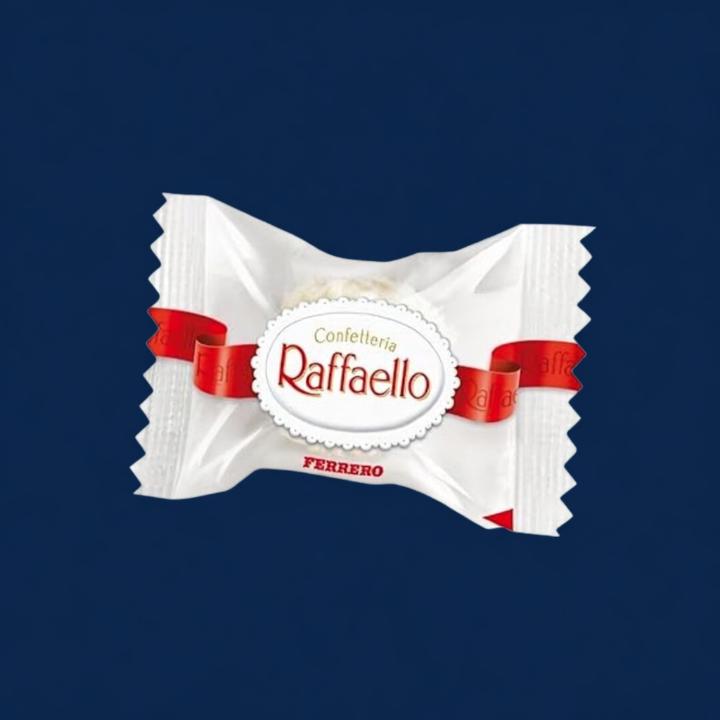
For chocolate lovers, Raffaello is a familiar name.
Coated in coconut powder on the outside, with crunchy nuts inside.
First bite – sweet.
Second bite – the taste of nuts. This "two-layered sensation" is its strength.
Recently, I got the chance to eat a chocolate made right here in Nepal.
Outside – cocoa and milk.
Inside – not nuts, but Lapsi (Nepalese hog plum).
First bite – an ordinary chocolate.
Second bite – a sudden change: slightly sour, slightly sweet.
A taste instantly recognizable to a Nepali palate.
Then I checked its price:
9 pieces of chocolate = NPR 200
That's more than NPR 20 per piece.
This small experience raises a big question. Can such Lapsi candy become an industrial product in Nepal?
Lapsi: The Invisible War from Tradition to Value Chain
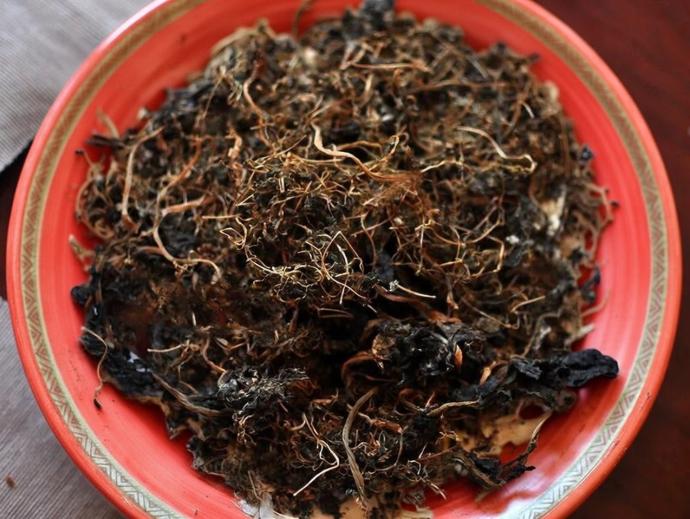
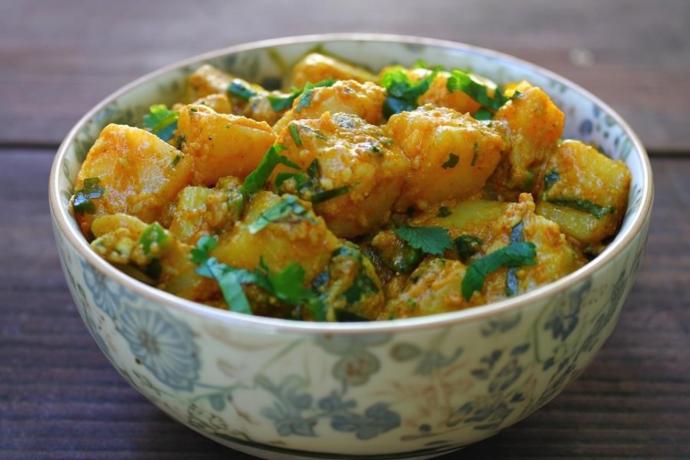
In Nepali society, Lapsi (Nepalese hog plum) currently exists in three different states: confined to tradition as pickle (achar), left to ripen and fall off trees to waste, and being transformed into industrial raw material through the efforts of a few entrepreneurs. This is not just a difference in usage; it is an economic competition over who controls the value chain.
Lapsi wrapped in chocolate breaks free from the confines of local pickle and opens up the possibility of entering the global confectionery market, where differentiation is the very basis of value.
With cultivation spread across 1,279 hectares and 32 districts throughout Nepal, there is no shortage of raw material. Moreover, even spoiled Lapsi can be turned into high-value products like mada (a traditional lapsi concentrate), which signals that the problem lies not in production, but in transformation and market access.
Nothing on the Lapsi tree needs to be wasted. Even when 10–15% of Lapsi spoils during transport from afar, it is made into mada, which sells at an even higher price.
Mahendra Shrestha - Kalimati Retailer cited in National Center for Food Development (2082)
Economic Potential of Lapsi Cultivation (Parbat Study, 2020)
Description | Quantity/Figure | Remarks |
|---|---|---|
Establishment cost per Ropani | NPR 3,762.89 | Cost from planting to fruit-bearing period |
Annual operating cost per Ropani | NPR 2,052.19 | Includes maintenance, pesticides, harvesting, transportation, etc. |
Annual gross income per Ropani | NPR 15,890.57 | Total revenue from sales |
Benefit-Cost Ratio (BCR) | 2.84 | Means NPR 2.84 return for every NPR 1 invested |
Payback period | 8 years | Time needed to recover initial investment |
Net Present Value (NPV) | NPR 30,146.3 per Ropani | Current value of long-term benefits |
Internal Rate of Return (IRR) | 33% | Annual rate of return (higher means more attractive) |
Source: Paudel et al. (2020)
This table clearly shows that lapsi cultivation is an extremely profitable business on paper. An IRR of 33% and a BCR of 2.84 indicate that it has the potential to provide higher returns than traditional agriculture. This means that with the right structure and market access, lapsi cultivation can be transformed not just into a means of livelihood, but into investment-grade agriculture.
But What is the Reality?
Description | Figure / Situation |
|---|---|
Current purchase price (per kg of Lapsi) | NPR 50 (2025 price) |
Pre-COVID annual sales (pickle + dried Lapsi) | 25–30 quintals |
Current annual sales (pickle + dried Lapsi) | Approximately 15 quintals |
Pre-COVID annual turnover | NPR 1.3–1.4 million |
Current annual turnover | NPR 0.6–0.7 million |
Profit margin (on sales) | Approximately 30% |
Source: The Kathmandu Post 4/5/2025; The Kathmandu Post 26/12/2022
The reality of Lapsi cultivation, which on paper shows a 33% return, is different: production exists, there is market demand, and after processing, there is a good margin, yet farmers' income remains unstable. This is where the biggest contradiction appears.
Remember: Lapsi grows in the field, but the money is made in the market.
The meaning is clear: the problem is not in production, but in value capture. Farmers are selling raw Lapsi, while the real profit is concentrated in processed products like pickles, candies, and chocolates, as well as in the branding stage. Whoever controls the upper parts of the value chain - processing, packaging, and market positioning - captures the profit. Remember: Lapsi grows in the field, but the money is made in the market.
Demand for Lapsi: The Reality Inside and Outside Nepal
The size of the international market for Lapsi is difficult to measure directly, as it does not have its own separate HS Code. This means Lapsi is not being exported as "Lapsi" itself, but in the form of pickles, candies, or powder. In practice, Lapsi is entering the international market not under its own identity but by borrowing the identity of other products, which is both an opportunity and a limitation.
If we could make Lapsi chocolate like high-quality hazelnut chocolate, it would have huge potential outside Nepal.
If we plant 10 Lapsi trees, they will keep providing us with income for a lifetime.
These two arguments suggest that the market for Lapsi is not the problem—the problem is how it is being presented. Looking at the price structure within Nepal makes this even clearer:
Product | Unit | Rate (NPR/kg) |
|---|---|---|
Fresh Lapsi (in season) | Kilogram | 30-40 |
Fresh Lapsi (off-season) | Kilogram | 150-300 |
Mada (concentrate) | Kilogram | 500-600 |
Ordinary chocolate (candy) | Kilogram | ~500 |
Pickle (Achar) | Kilogram | ~500-1500 |
Powder | Kilogram | ~600 |
Source: National Center for Food Development (2082)
The table tells us: selling fresh lapsi in season fetches only NPR 30-40 per kg. When made into ordinary chocolate (candy), the value of lapsi increases 10 times to ~NPR 500. When made into a pickle, the value can reach 15–40 times (NPR 500-1500). This shows that the real value of Lapsi lies not in the field, but in post-processing sales.
But an even greater opportunity lies here: by moving beyond ordinary candy and creating a premium Lapsi chocolate that delivers an experience like Raffaello, its value could increase another 4–6 times, meaning NPR 2,000–3,000 per kg. This has already begun in Nepal, but expansion is needed. With the right packaging, quality control, and branding, this product could easily secure a place in the international market.
Please note: It's not that there is no market for Lapsi. In fact, Lapsi simply hasn't yet found its true form.
Lapsi Chocolate Industry: Huge Potential, But Systemic Risks
The Lapsi chocolate industry has the capacity to create high value, but its expansion is being limited by several structural risks. Although these risks may appear as separate problems, they actually affect all three fundamentals: production, scale, and market trust. Importantly, these risks are not roadblocks; with the right strategy, they can be turned into competitive advantages.
Seasonal Raw Material: Lapsi is available only 6–7 months a year, which creates a situation where production must be reduced or halted for the remaining time.
- Invest in cold storage and pulp preservation.
- Adopt dehydration (dry powder) technology.
- Develop year-round complementary products (satu, harro, digestive mix).
Scaling Problem: Currently, Nepal has limited production capacity to handle large international orders.
- Cluster-based production model for small industries.
- Cooperative or contract manufacturing systems.
- Access to institutional loans and shared processing facilities.
Weak Risk Management: When events like landslides or pandemics cause major economic loss, the inability to receive full compensation through insurance is a serious problem.
- Clearly understand and negotiate agricultural and production insurance policies.
- Develop insurance models that ensure "end-product coverage".
Consumer Behavior: The initial psychological barrier—"Sour inside chocolate?"—can reduce repeat purchases.
- Sampling strategy in tourist areas.
- Relatable branding like "Nepali Raffaello".
- "First bite reaction" campaign on social media.
Three concrete understandings:
The problem is not production - it lies in consistency, scale, and perception.
For the Lapsi chocolate industry to succeed, a good product alone is not enough.
The supply chain must be stable, production scalable, and consumer psychology aligned.
The opportunity for Lapsi is huge, but the winners will not be those who produce—they will be those who build the system.
Final Conclusion: Is There a Future in the Lapsi Chocolate Business?
Lapsi chocolate is a highly promising venture for Nepal - a business that can be started with low investment, offers high value addition, has growing market demand, and leverages Nepal's geographical and biological advantages for long-term profitability.
- For Farmers: Start with 5–10 trees. Do not sell 100% of your fresh lapsi; instead, convert 20–30% into mada (dried lapsi mat) or dry powder. Form a group and use a shared solar dryer - this reduces costs and improves quality.
- For Entrepreneurs: Set up a small processing unit (dryer, grinder, packaging). Build a brand around "Nepali Lapsi Chocolate - A Unique Sour-Sweet Taste." Utilize tourist hubs, online platforms, and export channels.
- For Investors: Invest in processing machinery, cold storage facilities, and shared processing infrastructure. Provide solar dryer support to farmer groups — this is an excellent long-term investment opportunity.
The future of lapsi chocolate is bright - but it will not come on its own. If Nepal invests now in quality certification, modern technology, and international market linkages, lapsi chocolate will become one of Nepal's major export products within the next decade.
In the end, You may have seen a small box in the market. On the outside, it looks like ordinary chocolate. But what is inside? Lapsi.
That chocolate is called — Lekbesy Lapsi Truffle.
9 pieces. Price: NRS 200.
Go to the Kathmandu Organics page and see for yourself.
So, the next time you see a lapsi tree - do not consider it unlucky. It is the seed of tomorrow's Nepali Raffaello. And that small box of 9 pieces - that is the first bite of a new industry.